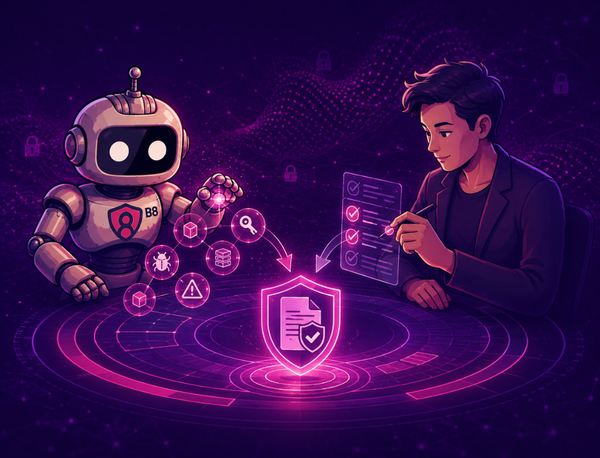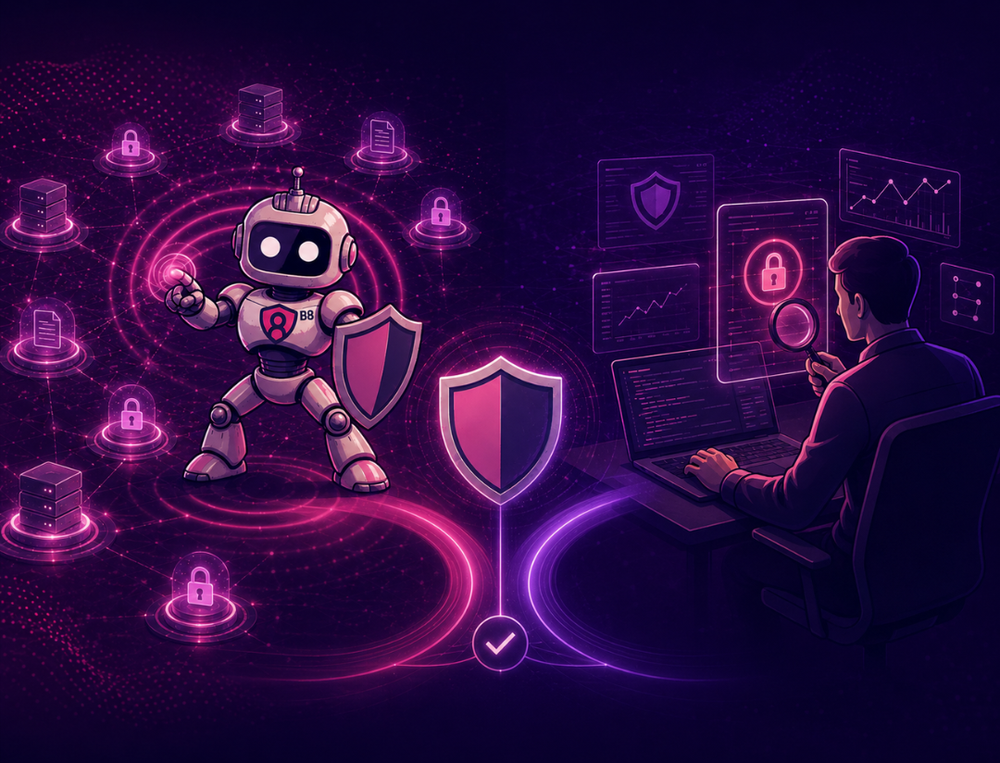
The wrong comparison is AI versus human. The useful comparison is AI-only, manual-only, or AI-assisted with human validation, because that third option is where the real difference between providers actually shows up.
What's actually true
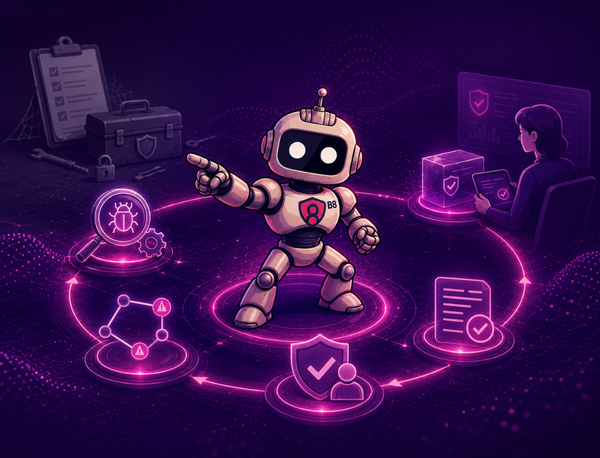
Both approaches actually follow the same basic process: planning and reconnaissance, scanning for vulnerabilities, safely exploiting what's found, developing recommendations, and generating and communicating a report. What changes between AI-driven and traditional manual testing isn't the shape of that process, it's who or what performs each step, and how much of it is performed at scale versus by hand.
AI-driven testing adds speed, scale and consistency. It examines an attack surface far faster than a manual process, applying the same checks consistently across every asset, and flagging patterns that match known vulnerability signatures without the variability of fatigue or time pressure. Traditional manual testing adds depth and judgement. A skilled tester finds business-logic flaws that don't match any known pattern, chains a series of low-severity findings into a real exploitation path, and makes the contextual calls about risk that no automated system currently makes reliably.
Where humans still matter
Run purely automated, AI output carries a meaningful false-positive rate and no exploitation evidence. Run purely manual without AI-assisted discovery, testing is thorough where the tester chooses to look, but constrained by the hours available, coverage gaps appear simply because nobody got there in time. Human testers remain essential for the reasons that haven't changed in a decade of penetration testing: understanding what a finding means in your specific business context, confirming whether something is exploitable in practice, and chaining individual issues into the kind of attack path a real adversary would actually pursue.
What this means for the buyer
If a provider claims their AI replaces testers entirely, be cautious, that claim doesn't hold up against how exploitation and business-context judgement actually work today. If a provider dismisses AI completely, they may be missing genuine opportunities to improve speed and coverage. When evaluating 'AI-driven' testing, ask what's done with the AI's output before it reaches you. When evaluating 'traditional manual' testing, ask how coverage is ensured across an environment too large to map by hand in the engagement window. The strongest answer to both questions is the same: AI for breadth and speed, human testers for validation, judgement and exploitation.
FAQ
Is AI-driven penetration testing less thorough than manual testing?
Used alone, it can miss business-logic flaws and exploitation chains. Combined with human validation, it typically improves coverage without sacrificing depth.
Is manual penetration testing becoming obsolete?
No. Human judgement, exploitation and business-context analysis remain essential, AI changes how testers spend their time, not whether they're needed.
Can AI find everything a skilled human tester can?
No. AI supports discovery and pattern recognition, but human creativity and contextual judgement remain necessary for exploitation and prioritisation.
Which approach is best for most organisations?
A blended model, AI-assisted testing with human validation, typically delivers the strongest combination of coverage, accuracy and usefulness.
What to do next
See the blended model in action — AI speed, human judgement.
Watch the demo videosWant proof in writing? Request a sample report and see how findings are validated.
Request a sample report