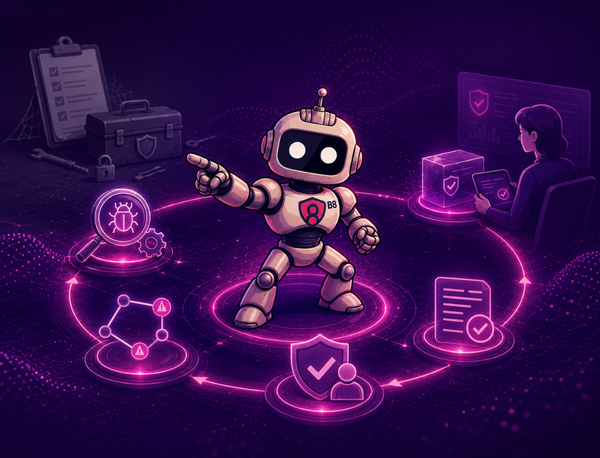
There's a quiet assumption behind a lot of AI security marketing: that finding a vulnerability and confirming it's actually a risk are the same task. They're not, and the gap between the two is exactly why human validation remains essential, no matter how good the underlying AI gets. AI doesn't understand your business the way a skilled human tester can, and in penetration testing, that distinction is the whole point.
What's actually true
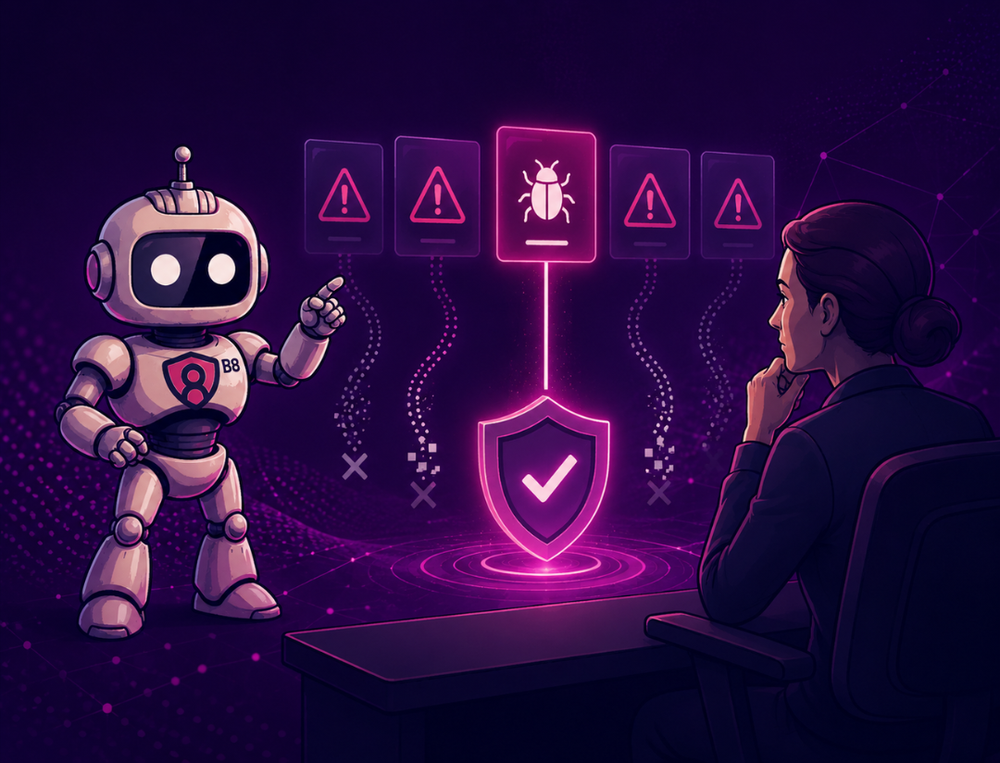
AI is genuinely strong at pattern matching: recognising configurations, code patterns or behaviours that resemble known vulnerability classes, at a scale and consistency no manual process can match. That's real, useful capability. What it doesn't reliably do yet is understand context, whether the specific instance it flagged is actually exploitable, whether it's reachable by an attacker in practice, and whether it matters given everything else in the environment. A potential finding may be a false positive, technically real but not exploitable, or severe-looking in isolation but lower priority than another issue creating greater business exposure.
Where humans still matter
This is where false positives come from, and they're not a minor inconvenience, they're a genuine cost. An IT team chasing flagged issues that were never real risks burns hours that should have gone toward issues that matter, and it erodes trust in the testing process over time. Some platforms reduce this at the AI layer itself, running multiple parallel AI reviews of a finding and requiring consensus before it's even surfaced, but that still isn't the same as confirmation. A human tester closes the remaining gap by attempting to actually exploit a finding, confirming whether it behaves the way the pattern match suggested it would in the real environment.
Humans also do something AI structurally can't yet do well: chain disconnected findings into a single attack path. An exposed internal endpoint, a slightly too-permissive access control, and a predictable session token might each look low-severity in isolation. A skilled tester recognises that, combined, they form a realistic route to something serious, reasoning that requires understanding intent, not just pattern recognition. Validation doesn't just reduce noise; it's what turns a finding into a decision leadership and compliance teams can actually trust.
What this means for the buyer
When you're told a provider uses AI in their testing, the useful follow-up question isn't whether that's good or bad, it's what happens to the AI's output next. Ask who reviews findings, whether false positives are removed, how exploitability is assessed, and whether the report explains business impact, not just severity. If every AI-flagged finding goes straight into your report without a human confirming exploitability and relevance, you're paying for a faster way to generate noise. If a human tester validates each one first, you're getting the actual benefit: AI's speed and coverage, with none of its blind spots.
FAQ
Why can't AI determine on its own whether a vulnerability is exploitable?
Exploitability depends on environment-specific context,configuration, surrounding controls and how systems interact, which current AI models don't reliably reason about end-to-end.
How big a problem are false positives in AI-driven security testing?
Significant if left unvalidated, false positives consume remediation time and can cause real issues to be deprioritised among the noise.
Does human validation slow down an AI-assisted test significantly?
It adds time relative to AI output alone, but typically far less than a fully manual test would take to achieve the same coverage.
What should I ask a provider about how they validate findings?
Ask specifically who reviews findings, how exploitability is confirmed, and who signs off before the report is delivered.
Can AI reduce its own false-positive rate before a human even looks at a finding?
Some platforms reduce noise by having multiple AI passes vote on consensus before a finding is even surfaced, a useful first filter, but it still doesn't replace a human confirming exploitability.
What to do next
See how our validation process actually works, step by step.
Watch the demo videosWant to see validation reflected in the final report?
Request a sample report