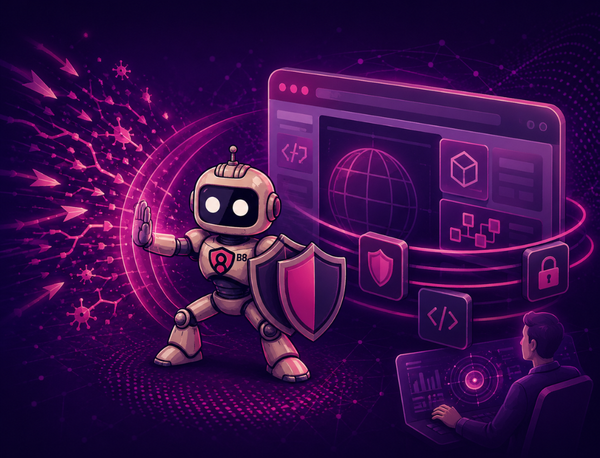
Most conversations about AI and penetration testing land in one of two unhelpful places. Either AI is dismissed as a faster version of vulnerability scanning, quick, but shallow, and no real substitute for a skilled tester, or it's oversold as something close to a replacement for human testers altogether. Neither view holds up, and the actual benefit sits in the gap between the two.
What AI-powered penetration testing actually improves
AI improves four practical things in a penetration test. Speed: traditional manual testing is time-intensive because testers have to manually work through every path, input and configuration, AI accelerates discovery and triage so testers spend less time on groundwork. Coverage: modern environments, cloud, APIs, third-party integrations, have grown faster than any manual process can map in a fixed engagement window, and AI extends how much of that surface actually gets tested. Consistency: AI applies the same baseline checks the same way every time, removing the variability that comes from fatigue, time pressure or an individual tester's experience level, some platforms reinforce this further by running multiple parallel AI reviews of a finding and requiring consensus before it's treated as worth investigating. And focus: by surfacing patterns at scale, AI helps direct human attention toward what's worth investigating in depth, rather than spreading tester hours evenly across everything.
Where humans still matter
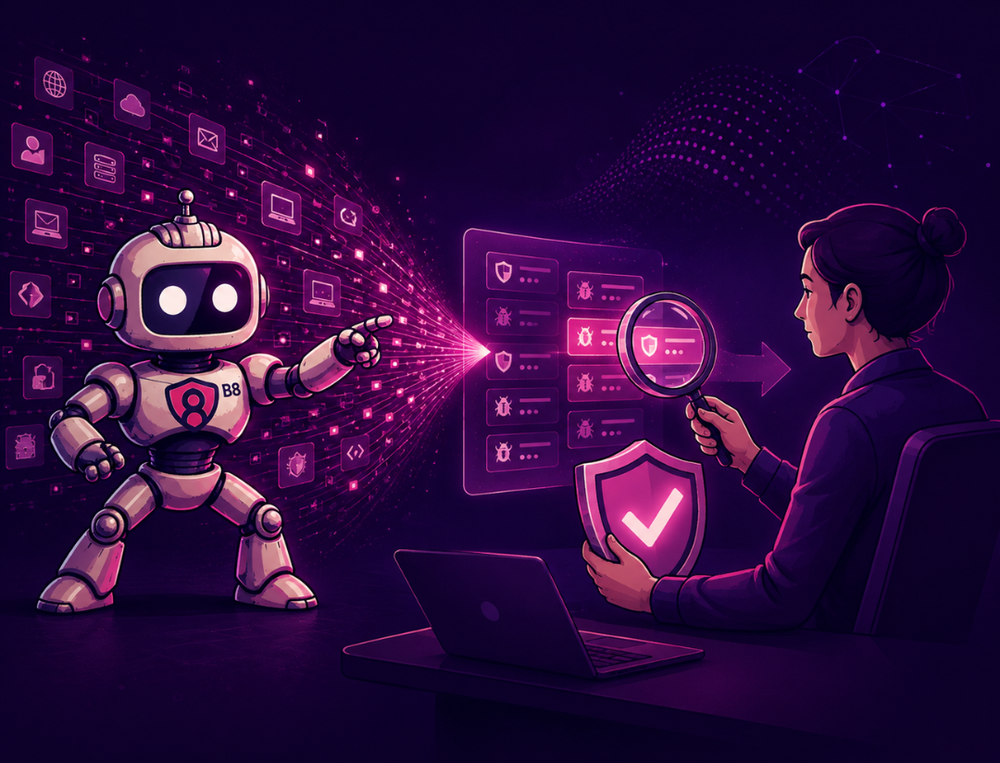
AI identifies signals. Human testers determine what those signals actually mean. A skilled tester confirms whether a finding is real, whether it's exploitable in your specific environment, whether it chains with other weaknesses into something more serious, and what it actually means for the business, not just what a severity score implies.
That distinction matters because security teams don't need more alerts. They need findings they can act on. Without human validation, AI-powered testing becomes another source of noise. With it, it becomes a decision-making tool, the difference between a list of theoretical issues and a prioritised set of risks worth fixing.
What this means for the buyer
The benefit of AI-powered testing isn't just faster delivery, it's a better balance of speed, depth and usefulness. When you're evaluating a provider, the question worth asking isn't whether they use AI. It's what happens to the AI's output before it reaches your report: who validates it, how exploitability is confirmed, and how findings get prioritised once they're confirmed real.
FAQ
Is AI-powered penetration testing the same as automated scanning?
No. Automated scanning is typically narrower and produces unvalidated findings. AI-powered penetration testing combines AI-assisted discovery with human analysis and validation.
Does AI replace human penetration testers?
No. AI extends speed and coverage; human testers are still required for judgement, exploitability, chaining and business context.
Will AI-powered testing produce more findings overall?
It may surface more potential issues, but the goal isn't volume, it's validated, prioritised findings that are worth acting on.
Is AI-powered testing suitable for fast-changing environments?
Yes, it's particularly useful where applications, cloud infrastructure or integrations change frequently and a manual-only process would struggle to keep pace.
What to do next
See the blended model in action — AI speed, human judgement.
Watch the demo videosWant proof in writing? Request a sample report and see how findings are validated.
Request a sample report